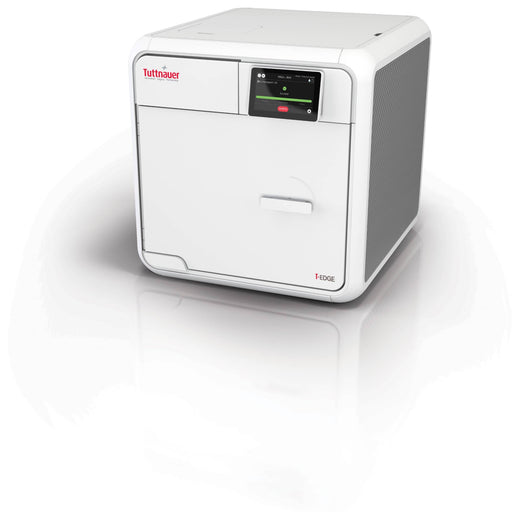
Shop our range of Autoclave Machines
About Autoclave Machines
Autoclaves are sometimes referred to as steam sterilizers. These are commonly used medical devices for healthcare as well as industrial applications. These machines use steam under pressure to kill bacteria, viruses, spores, and fungi, and disinfect instruments placed in the pressure vessel. Generally, in healthcare settings, the term "autoclave" is used to describe a Steam Sterilizer.
How does an Autoclave Machine work?
Autoclaves are used in healthcare settings for the sterilization of medical devices. The instruments and items to be sterilized are kept inside the pressure vessel of the autoclave. The pressure vessel is commonly referred to as a chamber.
The instruments placed in the chamber are heated to a predetermined temperature for a specific period of time. The moisture released by the steam transfers heat to the instruments efficiently to kill the bacteria and spores by destroying their protein structures.
There are 3 important factors, including time, temperature, and steam quality, which are critical to ensuring that the steam sterilization in the autoclave is successful.
The History of the Autoclave Machine
The earliest prototype of the autoclave machine, the steam digester, is better known to us as a pressure cooker. It was invented by physicist Denis Papin in 1679. However, it was only in 1879 that Charles Chamberland, a French microbiologist, created an advanced version of this device called an autoclave that could be used in healthcare settings.
The science of sterilization and disinfection began in 1881 when research by Robert Koch demonstrated the disinfecting properties of hot air and steam. He demonstrated the higher power of penetration that is exhibited by steam or moist heat compared to dry heat.
In 1933, modern technology was introduced for designing autoclave machines that had controlled performance and features to measure the temperature in the chamber. Over time, new technologies have been developed such as pre-vacuum cycles and steam-flush pressure-pulse, allowing medical science to evolve into modern autoclaves and steam sterilizers that are commonly used in hospitals today.
Key features of Autoclave Machines
- Fast cooling
- Efficient air removal
- Efficient heating
- Moisture removal
- Biohazard and waste system
- Active drying and complete drying of the load
- Features for safety
- Higher productivity
Different types of Autoclave Machines
Vertical autoclaves: These autoclave machines can be loaded by opening the lid at the top. These autoclaves are especially suited for laboratory use or in smaller clinics having cramped spaces as they have a smaller chamber.
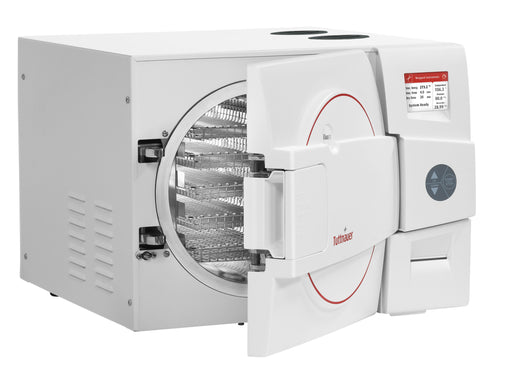
Horizontal autoclaves: These are front-loading steam sterilizers having a larger chamber. These devices are suitable for healthcare settings where the availability of space is not an issue, and the staff needs to sterilize a large number of instruments every day.
Class B autoclaves: These are premium pre-vacuum autoclave machines that can sterilize almost all materials. These are much faster as they are designed to remove all the air from the chamber using a powerful vacuum pump.
Class S autoclaves: These are a type of gravity displacement autoclave machines, which use a wall of dense steam by repeating the process thrice. This device is designed to extract the entire air from the chamber. It is typically used to sterilize porous loads and bagged instruments. It is less versatile and slower than class B autoclaves.
Class N autoclaves: These autoclaves are simple and easy to use. These are gravity displacement autoclave machines designed to remove only a certain portion of the air from the chamber. They are suitable for the sterilization of simpler loads such as flat medical tools.
In addition, autoclaves can also be classified as compact, automatic, or semi-automatic depending on the extent of human intervention needed to operate them.
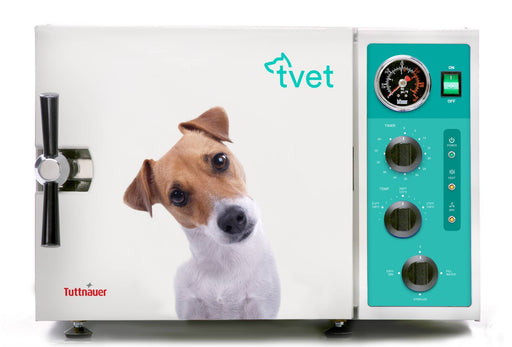
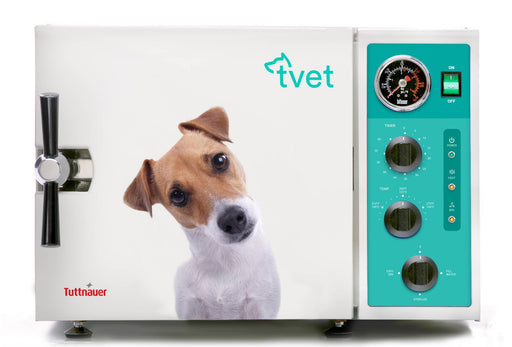
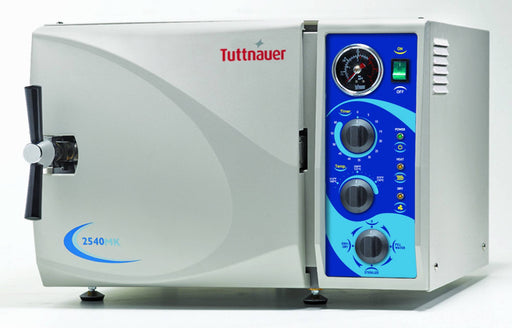
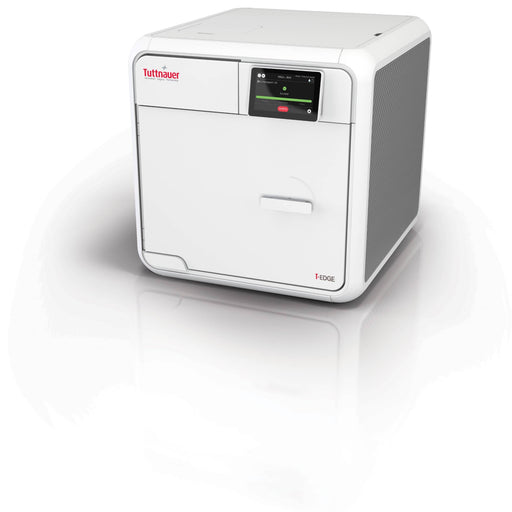
We have a range of autoclave machines from reputed brands such as Midmark M11 and M9 and Tuttnauer 1730, 2340M, EZ10P, 3870EAP, and 2540M.